
13th FOKUS Media Web Symposium

June 16–17, 2026 – Berlin

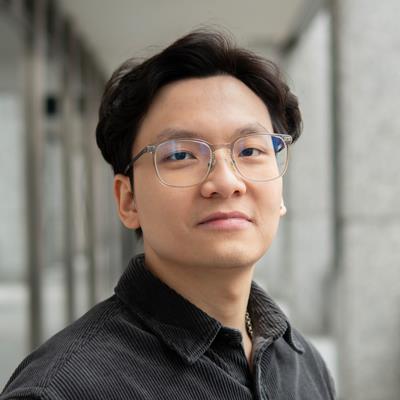
Bach Do

Research Associate

Fraunhofer FOKUS

With a Master’s degree in International Media Informatics, complemented by a specialization in Blockchain, Machine Learning and Web Technology, Bach Do has contributed significantly to several educational technology projects at Fraunhofer FOKUS. His hands-on experience and commitment to developing future-oriented solutions characterize him as a valuable member in projects ranging from architectural solutions to full-stack development.

In his thesis, Bach has developed and implemented innovative approaches to learning technologies that enhance the learning experience through personalized course recommendation systems and adaptive learning platforms. These projects aimed to optimize access to and success in continuing education through the use of cutting-edge web technologies and AI-powered tools.

During his time at Fraunhofer FOKUS, Bach has worked on various projects where he was able to demonstrate his skills in the application and development of technology solutions. His focus is on contributing to the fulfillment of Fraunhofer FOKUS’ goals through innovative approaches in media technology.

Bach Do’s goal is to expand his knowledge and stay at the forefront of technological development through continuous education and practical application.

  • Building on the foundational understanding from the first tutorial, this session focuses on how to develop AI‑powered applications tailored to the media domain. It covers hands‑on methods, architectural approaches, and best practices for building robust, production‑ready AI systems.

    Participants learn how to work effectively with LLMs — from prompting and orchestration to fine‑tuning and advanced retrieval techniques (RAG). We explore how to integrate multimodal models into production workflows, build intelligent assistants, and design agent‑based pipelines capable of handling complex tasks.

    Topics include:

    • LLM-Based Application Development: Prompting strategies, evaluation, orchestration
    • Fine‑Tuning & Customization: Parameter‑efficient methods, domain adaptation
    • Retrieval‑Augmented Generation (RAG): Document pipelines, vector databases, retrieval workflows
    • AI Agents: Tool use, multi‑step reasoning, automation patterns
    • Multimodal AI: Vision‑language models, video analysis, interactive media chatbots
    • Hands‑On Use Cases:
      • Intelligent document‑based chatbots
      • Search & recommendation assistants
      • Video‑based conversational agents
      • Interview bots for expert knowledge capture
    • Authenticity & Security: C2PA, provenance, compliance, responsible AI guidelines

    This tutorial is designed for developers, media technologists, innovation leads, and anyone creating AI-driven applications in media environments.

    Christopher Krauss

    Media & Data Science Lead

    Fraunhofer FOKUS

    Bach Do

    Research Associate

    Fraunhofer FOKUS

    Marc Ghanime

    Research Associate

    Fraunhofer FOKUS

  • As AI becomes increasingly central to media workflows, understanding how modern models actually work is essential. This tutorial provides a clear, accessible, and technically grounded introduction to contemporary AI systems — with a special focus on neural networks, Transformer models, and Large Language Models (LLMs).

    We unpack the mechanics behind today’s generative AI: how models process language, how attention works, what happens during training and inference, and why Transformers are so effective. Through intuitive explanations, visual breakdowns, and simplified examples, participants will gain a solid conceptual understanding of how modern AI systems operate “under the hood.”

    Topics include:

    • AI & Machine Learning Basics: Core concepts, model families, training principles
    • Vectorization: Architecture, embeddings, tokenization, optimization
    • The Transformer Model: Attention mechanisms, encoder/decoder structures, masking
    • Capabilities & Limitations: Bias, hallucinations, safety constraints, model weaknesses
    • Looking Ahead: Trends such as multimodal models and mixture of experts

    This tutorial is ideal for participants who want to understand how modern AI and LLMs function.

    Christopher Krauss

    Media & Data Science Lead

    Fraunhofer FOKUS

    Marc Ghanime

    Research Associate

    Fraunhofer FOKUS

    Bach Do

    Research Associate

    Fraunhofer FOKUS

  • Continuous AI Upskilling in the Workplace (in English)
    Hector Ibarra

    Principal Solutions Architect

    Amazon Web Services (AWS)

    Dr. Anne-Sophie Waag

    Referentin Bildungspolitik / Education Policy Advisor

    Wikimedia Deutschland e. V.

    Arno Meiler, FWU (Das Medieninstitut der Länder)
    Dr. Steffen Schneider, KI macht Schule gGmbH
    Kristin van der Meer

    Lehrkraft und Bildungsinfluencerin mit Leidenschaft

    Neue Grundschule Potsdam

  • 10:00 - 10:55: Interoperability in Education – Building Sustainable Digital Learning Ecosystems

    Discover how interoperability is shaping the future of digital education. In this event tutorial, you will explore how open standards and modular architectures enable sustainable, flexible, and future‑proof educational ecosystems.

    • Interoperability in education – foundations & relevance
      Learn why interoperability is a key prerequisite for scalable digital education and how it helps overcome platform silos, vendor lock‑in, and fragmented learning landscapes.
    • Connecting learning platforms, tools & content
      Discover how learning platforms, external tools, and educational content can be seamlessly connected to form coherent learning experiences across institutional and organizational boundaries.
    • Learner data, learning records & transparency
      Gain insights into how interoperable data flows make learning activities and progress visible and reusable – enabling evidence‑based decisions for learners, educators, and organizations.
    • Standards as enablers of sustainable ecosystems
      Learn how established interoperability standards provide a common language for systems, ensure long‑term portability, and support innovation without sacrificing stability.
    • From integration to ecosystems – architectural perspectives
      Understand how interoperable architectures support modular growth, simplify the integration of new services, and create resilient digital education ecosystems.
    Truong-Sinh An

    Project Manager R&D

    Fraunhofer FOKUS

    Bach Do

    Research Associate

    Fraunhofer FOKUS

    The-Anh Nguyen

    Research Associate

    Fraunhofer FOKUS

    11:05 - 12:00: AI in Education – A practical introduction to modern AI‑powered learning

    Experience how artificial intelligence is redefining the world of education. In this event tutorial, you will immerse yourself in the most exciting current developments in AI-supported learning technologies.

    • AI in education – basics & possible applications
      Learn how AI is rethinking learning methods and advancing digital learning environments through automation, analysis, and intelligent support.
    • Personalized Recommendations & Adaptive Learning Paths
      Discover how AI enables individual learning paths and supports and motivates learners through targeted incentives.
    • Learning Analytics – Data-Based Optimization of Learning Processes
      Gain insights into how data-based analyses make learning progress visible and support informed decisions – for learners, teachers, and organizations.
    • Large language models (LLMs) – intelligent support in everyday learning
      Learn how modern language models make content more accessible, simplify learning processes, and open up new forms of interactive learning.
    • Integration into learning management systems (LMS) & digital education ecosystems
      Learn how AI can be seamlessly embedded into existing learning platforms and what added value it creates in holistic learning environments.


    We look forward to exploring and discussing the diverse opportunities and potential of learning technologies with you.


    Marc Ghanime

    Research Associate

    Fraunhofer FOKUS

    Bach Do

    Research Associate

    Fraunhofer FOKUS